




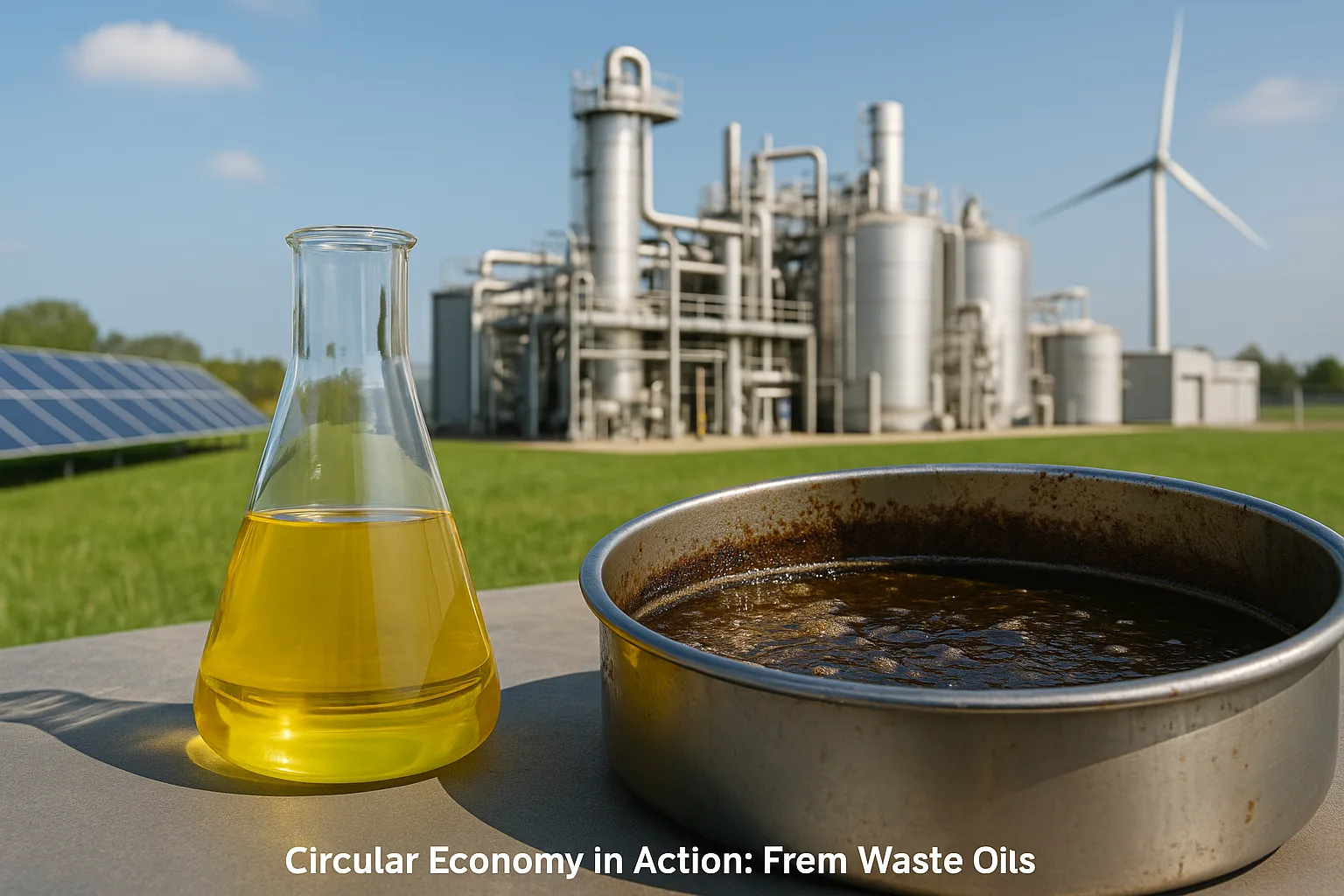
Circular Economy & Biodiesel: Turning Waste Oils into Clean Energy
Waste-based biodiesel is a practical example of the circular economy in action. By recovering eligible waste oils and residue feedstocks and transforming them into renewable fuel, valuable resources can remain in productive use rather than becoming waste.
For the renewable fuels industry, this approach connects responsible waste management, traceable sourcing and lower dependence on fossil-based resources. At Kanola Biofuels B.V., these principles form an important part of our approach to biodiesel production and feedstock sourcing.
Circular Economy in Action: From Waste Oils to Clean Energy
The circular economy is based on a simple but powerful principle: resources should remain in productive use for as long as possible, while waste streams should be recovered and transformed into valuable inputs wherever technically and environmentally appropriate.
In the transport and renewable fuels sector, waste-based biodiesel provides a practical example of this approach. Materials such as used cooking oil and other eligible waste and residue feedstocks can be collected, documented and processed into renewable fuel rather than being treated solely as waste.
This creates an opportunity to connect waste recovery with renewable energy production while supporting a more resource-efficient economy.
For Kanola Biofuels B.V., the relationship between responsible feedstock sourcing, traceability and renewable fuel production is an important part of responsible biodiesel manufacturing.
From Waste Stream to Waste-Based Biodiesel
Used oils can become valuable secondary raw materials when they are collected and managed through appropriate supply chains.
Used cooking oil (UCO), for example, originates from food preparation activities in restaurants, catering operations, food businesses and other sources. After use, the material requires proper collection, handling and documentation before it can become an eligible feedstock for renewable fuel production.
When suitable waste oils and residues are recovered and supplied through documented channels, they can enter biodiesel production as feedstocks.
This creates a circular pathway:
Waste generation → Collection → Documentation → Processing → Biodiesel production → Renewable fuel use
Instead of relying exclusively on virgin raw materials, this model seeks to recover value from materials that have already completed a previous use cycle.
The result is not simply waste management. It is the transformation of eligible secondary materials into useful renewable energy products.
Why Waste-Based Biodiesel Matters
Waste-based biodiesel can contribute to several objectives within the European renewable energy and transport landscape.
First, it provides an additional productive use for eligible waste and residue materials. Feedstocks that might otherwise require disposal or alternative treatment can potentially be recovered and processed into renewable fuel.
Second, biodiesel can help reduce dependence on fossil-based diesel by introducing renewable alternatives into the transport fuel mix.
Third, the use of waste and residue feedstocks supports the broader transition toward more circular resource management.
The environmental performance of biodiesel, however, depends on several factors. Feedstock type, origin, transportation, processing methods and supply-chain controls can all influence the overall sustainability profile.
For this reason, responsible biodiesel production requires more than simply identifying a material as waste.
Documentation and traceability are essential.
Waste-Based Biodiesel and Traceability
Traceability plays a central role in responsible waste-based biodiesel production.
A renewable fuel supply chain can involve multiple stages, including feedstock collection, transportation, storage, processing and final product distribution. Reliable documentation helps establish where eligible materials originated and how they moved through the supply chain.
At Kanola Biofuels B.V., our approach focuses on documented sourcing and controlled supply-chain processes.
This includes attention to feedstock information, supplier documentation and applicable sustainability requirements.
Traceability also supports communication between producers, suppliers, customers and other participants in the renewable fuels value chain.
For commercial partners, reliable documentation is particularly important because technical specifications and sustainability information may be required as part of purchasing, compliance and supply-chain management processes.
Responsible Feedstock Sourcing
The quality and reliability of biodiesel production begins with feedstock sourcing.
Waste and residue feedstocks can vary significantly in composition and quality. Effective sourcing therefore requires supplier relationships, documentation procedures and appropriate quality controls.
Used cooking oil is one of the best-known examples of a waste-derived feedstock used within the biodiesel industry.
Other eligible waste and residue materials may also be suitable depending on their characteristics, applicable requirements and production capabilities.
Kanola Biofuels B.V. works with feedstock suppliers and commercial partners to support reliable sourcing relationships and transparent supply chains.
Suppliers of eligible feedstocks can contact our commercial team to discuss specifications, documentation requirements and potential supply opportunities.
Quality Control in Biodiesel Production
Circularity alone does not determine the quality of a renewable fuel.
The conversion of waste-derived feedstocks into biodiesel requires controlled production processes and appropriate quality management.
Feedstock characteristics can influence processing requirements and final product parameters. Monitoring and testing therefore play an important role throughout production.
For European biodiesel markets, EN 14214 provides an important technical framework for fatty acid methyl ester (FAME) used as automotive diesel fuel or as a blending component.
Quality-focused production helps ensure that renewable feedstocks are transformed into products suitable for their intended commercial applications.
At Kanola Biofuels B.V., production and quality considerations are therefore closely connected with feedstock sourcing and traceability.
Supporting the European Circular Economy
The transition toward a more circular European economy requires cooperation across multiple industries.
Waste generators, collectors, feedstock suppliers, logistics companies, biodiesel producers, fuel distributors and customers all form part of the wider value chain.
Recovering eligible waste oils is only the beginning.
These materials must be collected responsibly, transported through appropriate channels, documented, processed and converted into products that can re-enter the economy.
Waste-based biodiesel demonstrates how these different activities can connect.
A material that has completed its original purpose can potentially become a feedstock for renewable fuel production, creating additional value while supporting resource efficiency.
This is the practical meaning of circular economy principles within the renewable fuels sector.
From Waste to Renewable Energy
The future of renewable fuels will depend not only on production capacity but also on the quality, origin and traceability of the raw materials used.
Waste-based biodiesel provides an example of how existing material streams can be recovered and transformed into useful energy products.
Through responsible feedstock sourcing, documented supply chains, controlled production and appropriate quality management, biodiesel production can contribute to a more circular use of resources.
Kanola Biofuels B.V. continues to develop its role within this value chain by connecting feedstock sourcing, biodiesel production, quality management and commercial supply.
For businesses seeking biodiesel, crude glycerin or opportunities to supply eligible feedstocks, our commercial team is available to discuss current specifications, documentation and potential cooperation.
Comments are closed