




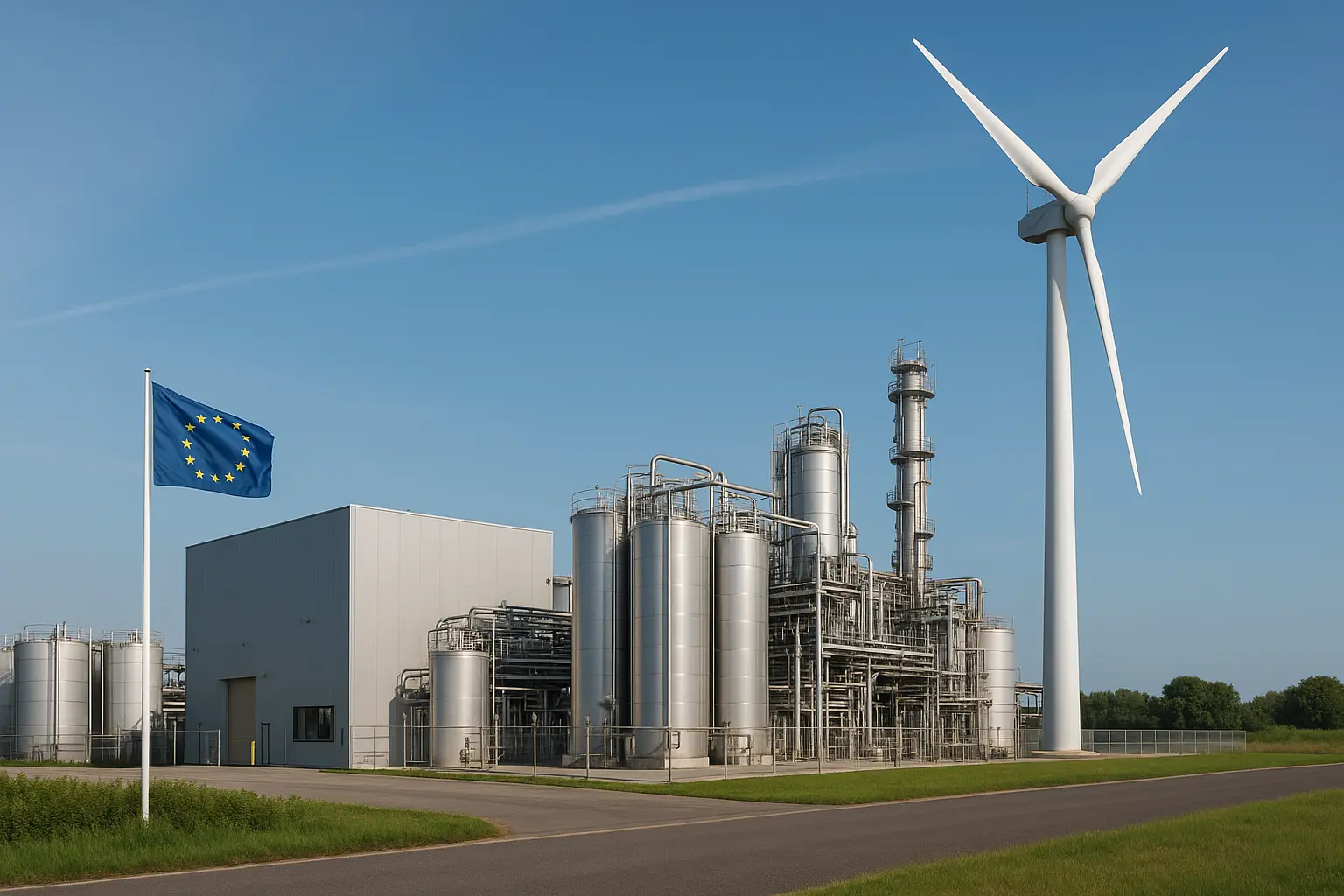
Future of Biodiesel in Europe: 5 Key Trends for 2030
The future of biodiesel in Europe is being shaped by ambitious climate targets, evolving renewable energy policies and a growing focus on waste-based feedstocks. As European countries work to reduce greenhouse gas emissions from transport, sustainably produced biodiesel can continue to play an important role in the transition toward lower-carbon mobility.
For producers, fuel suppliers and businesses operating across the European energy market, this transition is not only about increasing renewable fuel volumes. Traceability, responsible sourcing, consistent product quality and compliance with European requirements are becoming increasingly important.
At Kanola Biofuels B.V., our focus is on producing biodiesel in the Netherlands from waste and residue feedstocks while maintaining attention to traceability and EN 14214 quality requirements.
1. The Future of Biodiesel in Europe Under RED III
European renewable energy policy is one of the major forces influencing the future of biodiesel in Europe.
The revised Renewable Energy Directive, commonly referred to as RED III, strengthens the European Union’s renewable energy framework toward 2030. Transport remains an important part of this transition because reducing dependence on fossil fuels requires a combination of technologies and renewable energy solutions.
For the biofuels industry, the direction is increasingly clear: renewable fuels need to demonstrate not only their technical performance but also their sustainability credentials.
This creates opportunities for producers capable of working with suitable waste and residue feedstocks while maintaining reliable documentation and traceability throughout the supply chain.
The European Commission provides further information about the role of biofuels and renewable energy in the European transport sector.
2. Waste-Based Feedstocks and the Circular Economy
One of the most important developments affecting the future of biodiesel in Europe is the increasing focus on waste and residue feedstocks.
Instead of relying solely on virgin raw materials, waste-based biodiesel can make productive use of materials that have already completed an initial economic lifecycle.
This approach supports the principles of a circular economy by transforming suitable waste and residue streams into renewable fuel.
However, feedstock selection is only part of the process. Reliable sourcing, documentation and appropriate processing are also essential.
At Kanola Biofuels, our feedstock expertise is focused on waste and residue streams suitable for biodiesel production. This allows us to combine responsible sourcing with practical experience in converting feedstocks into a usable renewable fuel.
Businesses interested in supplying suitable materials can learn more through our Feedstocks section.
3. Traceability Is Becoming Increasingly Important
Traceability is becoming a central requirement throughout renewable fuel supply chains.
Companies purchasing biodiesel increasingly need to understand where feedstocks originate, how they move through the supply chain and what documentation supports the final product.
For this reason, the future of biodiesel in Europe will depend not only on production capacity but also on transparent and traceable supply chains.
A structured approach to documentation can help producers, suppliers and customers maintain confidence throughout commercial transactions.
For Kanola Biofuels, traceability forms an important part of our approach to waste-based biodiesel production in the Netherlands. By maintaining visibility across the supply chain, we aim to support reliable and responsible business relationships.
4. EN 14214 and Consistent Biodiesel Quality
Sustainability alone is not enough. Biodiesel must also meet the technical expectations of the European market.
EN 14214 provides specifications and quality requirements for fatty acid methyl ester (FAME) intended for use in diesel engines and related applications.
Important parameters can include characteristics such as ester content, water content, sulphur, phosphorus and cold-flow performance.
Consistent quality control therefore remains an important part of professional biodiesel production.
Kanola Biofuels maintains an EN 14214 quality focus as part of its biodiesel production approach. Our objective is to combine waste-based feedstock expertise with controlled production and attention to the specifications expected by customers in the European market.
More information about our product approach can be found on our Biodiesel page.
5. Opportunities for Biodiesel Producers Toward 2030
The transition toward renewable transport creates opportunities, but it also raises expectations for producers.
Customers increasingly evaluate more than price and availability. Feedstock origin, sustainability characteristics, traceability, technical specifications and supply reliability can all influence purchasing decisions.
This means successful biodiesel producers will need to demonstrate how their products fit into increasingly transparent and sustainability-focused supply chains.
Location can also provide practical advantages.
Kanola Biofuels is based in Lexmond, the Netherlands, positioning our operations within an important European logistics and energy market. This location supports our ability to work with suppliers and commercial partners across the region.
As Europe progresses toward its 2030 climate and renewable energy objectives, waste-based biodiesel can remain part of a broader portfolio of solutions designed to reduce the environmental impact of transport.
What the Future Means for Kanola Biofuels
The future of biodiesel in Europe will be defined by more than production volume. Responsible feedstock sourcing, traceability, consistent quality and regulatory awareness will increasingly determine which producers are positioned to serve the evolving European market.
Kanola Biofuels B.V. intends to contribute to this transition through waste-based biodiesel production in the Netherlands.
Our approach is built around four key principles: a Netherlands-based operation, a traceable supply chain, expertise in waste and residue feedstocks and a strong focus on EN 14214 quality requirements.
These principles provide a foundation for working with businesses seeking renewable fuel solutions as well as suppliers looking for a reliable destination for suitable waste and residue feedstocks.
Frequently Asked Questions About Biodiesel in Europe
What role can biodiesel play in Europe’s energy transition?
Biodiesel can contribute to reducing reliance on fossil diesel in applications where liquid fuels continue to be required. Waste-based biodiesel can be particularly relevant when suitable waste and residue feedstocks are used responsibly.
Why are waste and residue feedstocks important?
Using suitable waste and residue materials can support circular-economy principles and reduce reliance on virgin feedstocks while turning existing material streams into renewable fuel.
Why is EN 14214 important for biodiesel?
EN 14214 establishes technical specifications for FAME biodiesel in the European market. Maintaining attention to these requirements helps support consistent fuel quality and commercial reliability.
Where is Kanola Biofuels located?
Kanola Biofuels B.V. is based in Lexmond, the Netherlands, where we focus on waste-based biodiesel production and the development of reliable relationships with feedstock suppliers and commercial customers.
Comments are closed